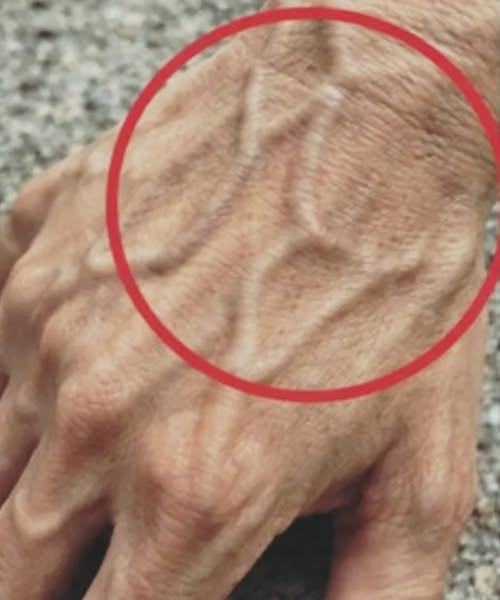
Visible veins often catch people’s attention and raise immediate questions about health. When veins appear more prominent on the hands, arms, legs, or feet, it can seem unusual or even concerning at first glance.
Many people naturally assume that visible veins are a sign of poor circulation or an underlying problem. However, in most cases, this assumption is not accurate, and visible veins are often completely normal.
Understanding why veins become more noticeable requires a basic understanding of how the circulatory system works. Veins play a critical role in returning blood back to the heart after oxygen has been delivered to the body.
Unlike arteries, which carry oxygen-rich blood away from the heart under high pressure, veins operate under lower pressure and rely on valves and muscle movement to help blood flow effectively.
Because veins are closer to the surface of the skin than arteries, they are more likely to become visible under certain conditions. This visibility alone does not indicate a problem with circulation.
One of the most common reasons for visible veins is low body fat. When there is less fat beneath the skin, veins have less tissue covering them, making them appear more prominent and easier to notice.
This is particularly common in athletes or individuals who maintain a lean physique. In these cases, visible veins are often considered a sign of fitness rather than a health concern.
Aging is another factor that contributes to more noticeable veins. As people grow older, their skin naturally becomes thinner and loses elasticity, allowing underlying structures such as veins to show more clearly.
This process is gradual and expected over time. It does not necessarily reflect poor circulation but rather normal changes in the skin and connective tissues associated with aging.
Exercise can also temporarily increase vein visibility. During physical activity, blood flow increases to supply muscles with oxygen, causing veins to expand and become more noticeable.
This effect is usually temporary and fades once the body returns to a resting state. It is a normal response to increased demand on the circulatory system during movement.
Warm temperatures can have a similar impact. Heat causes blood vessels to widen, a process known as vasodilation, which helps regulate body temperature but also makes veins more visible.
Genetics also play an important role in vein visibility. Some individuals naturally have lighter or thinner skin, making veins easier to see even without other contributing factors.
In these cases, visible veins are simply part of a person’s natural physical characteristics. They do not indicate a problem and typically do not require any form of treatment.