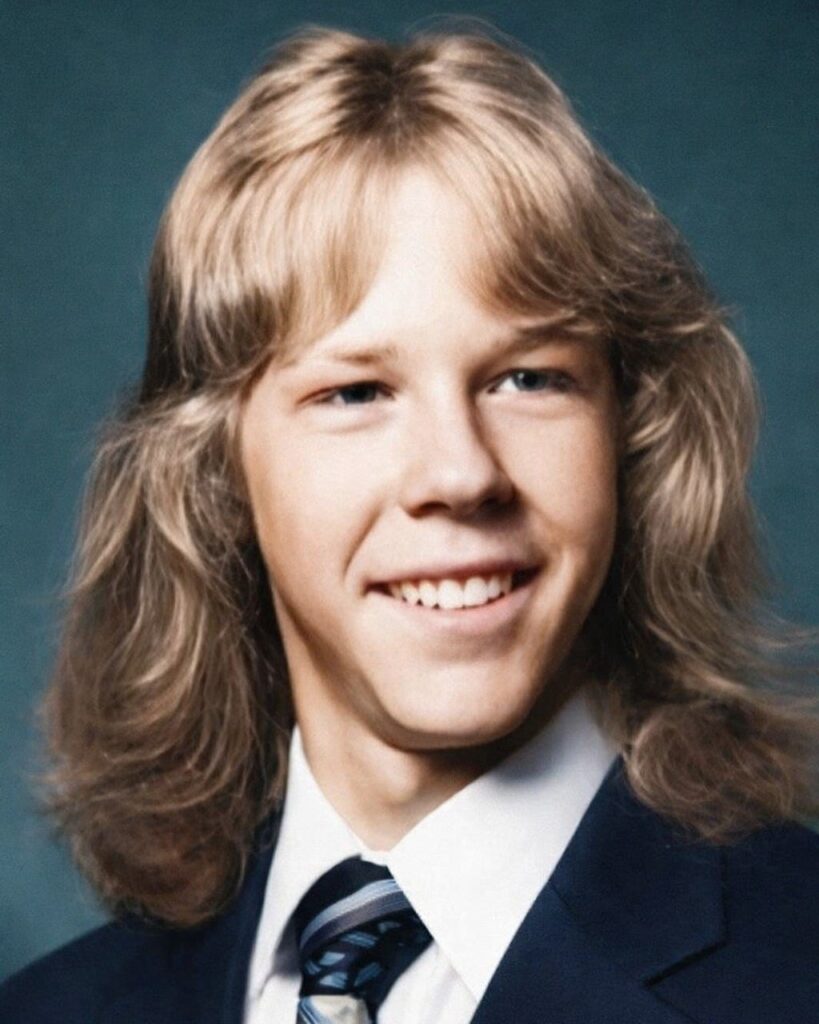
James Hetfield’s life reads like a collision between tragedy and destiny. The religious isolation, his father’s sudden disappearance, and his mother’s preventable death didn’t just hurt him; they hollowed out a space that music would later fill. Guitar riffs became the language he couldn’t speak, the rage he couldn’t name, the grief he wasn’t allowed to process. When he met Lars Ulrich, that private storm finally had a conduit. Metallica’s sound wasn’t just heavy — it was haunted, wired with abandonment, faith gone wrong, and the terror of being a kid left alone with his thoughts.
Yet the same pain that fueled his art nearly destroyed him. Addiction, anger, and emotional shutdown followed him into fame, proving that talent doesn’t cancel trauma. Rehab, therapy, and honesty didn’t erase his past, but they transformed it. Hetfield’s legacy isn’t just the music; it’s the proof that surviving your story can be more radical than escaping it.