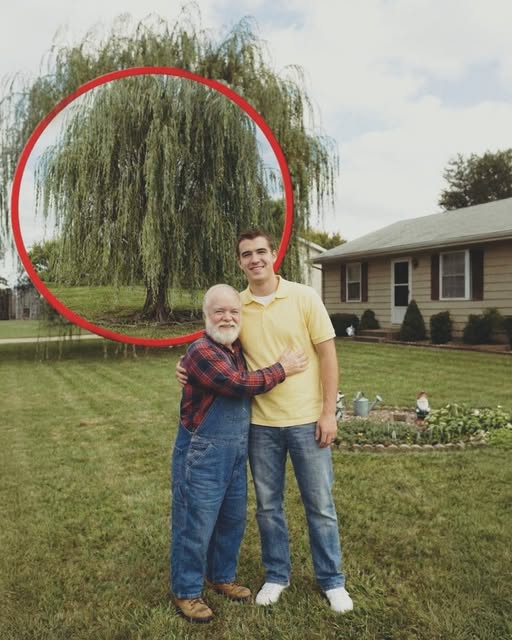
For twenty-two years, the creaky farmhouse outside Cedar Hollow was more than a home—it was a sanctuary built from memories, lessons, and the tireless effort of Grandpa Earl
Who raised me alone after my parents passed, trading retirement for my care. Every morning, I would wake to the smell of wood smoke and the soft creak of the old floorboards.
Grandpa Earl moved slowly but deliberately, his hands roughened by decades of hard work, a quiet testament to perseverance and love.
Our life together was simple, filled with routines that became sacred rituals. School projects were completed at the kitchen table under his watchful eye, and scraped knees were treated with gentle care, each small act infused with unspoken wisdom.
Grandpa Earl often spoke in stories. He would recount tales of his youth, of his own parents’ sacrifices, weaving lessons about integrity, resilience, and the value of hard work into seemingly ordinary anecdotes that shaped my understanding of the world.
The farmhouse itself was a living chronicle of
family history. Weathered photographs adorned the walls, and every room held relics of bygone generations—each piece a tangible connection to the past that anchored my identity and my sense of belonging.
When Grandpa Earl passed, the silence that followed his funeral was almost unbearable. For a moment, I felt the weight of two decades of shared life pressing down, a profound absence that seemed to echo through every creaking board and dusty corner
That silence, however, was short-lived. Marla, my cousin who had disappeared from our lives for years, appeared in the farmhouse the day after the funeral, her presence sharp and intrusive, bringing tension where only quiet reflection had existed.
She moved through the house like a predator, stirring her coffee as though she belonged, inspecting crown molding and furniture as though calculating value rather than mourning loss, a stark contrast to the grief I carried quietly within me.
“I think we should sell this place, Nolan,” she said casually, her tone devoid of empathy. “You can’t handle it alone.” The words, cold and transactional, pierced the fragile sense of continuity I had built with Grandpa over two decades.
Her intentions became immediately clear. Marla wasn’t there to honor memory or heritage—she was there to liquidate assets, to claim the tangible remnants of a life she had long ignored, a plan that made my chest tighten with protective urgency.
I wandered through the familiar rooms, tracing the grooves of the worn kitchen counter and the faded wallpaper in the bedroom, trying to anchor myself to the only home I had ever truly known. Every creak and shadow reminded me of Grandpa’s presence.
Late that evening, as the farmhouse grew quiet, I discovered a yellowed envelope tucked beneath the lid of Grandpa’s old toolbox, his shaky handwriting revealing a secret he had withheld for twenty-two years, hinting at lessons still to be learned.
The envelope contained a single instruction: “Dig beneath the weeping willow in the backyard. There’s a private matter I’ve been hiding from you.” The words carried weight, a final test of resolve and character.
Under the cold night sky, I drove a shovel into the soil beneath the gnarled, ancient willow tree, the rhythmic sound of metal striking earth echoing through the yard, a mixture of anticipation, dread, and reverence coursing through me.
Horticulture
Clang. My shovel struck metal. Beneath the roots, a rusted safe lay hidden, a tangible embodiment of Grandpa’s foresight and understanding of human nature, placed deliberately to test both my patience and my loyalty to family legacy.
As I knelt to examine it, a car door slammed. Marla appeared in the yard, her eyes narrowing as they locked onto the safe with predatory intensity. “What did he leave, Nolan?” she demanded, her voice a mixture of curiosity and entitlement.
Inside the safe, I found a modest stack of cash alongside a letter, a deliberate misdirection crafted by Grandpa to observe how I would respond under pressure, knowing that greed often revealed character more than calm deliberation ever could
The letter explained that the contents were not the true inheritance, but a test of integrity: would I succumb to temptation and compromise the values Grandpa had instilled in me, or would I honor the life and lessons he had shared for more than two decades?
Marla’s eyes gleamed with opportunity. “This place is sinking, Nolan. Split the money and start fresh,” she urged, mistaking the tangible cash for the ultimate prize, blind to the deeper significance embedded in the farmhouse and Grandpa’s intentional design.
I reflected on the decades-long rivalry subtly embedded in our family dynamics. Marla had always sought the things that were never hers, trying to earn attention and affection through material offerings, misunderstanding the intangible value Grandpa had always emphasized.
Family
“You’re wrong,” I said firmly. “I’m not selling.” Her mask slipped in anger and disbelief, revealing a side of her I had long known but rarely confronted, the relentless pursuit of ownership over connection laid bare.
In her fury, Marla grabbed the cash, ignoring a second sealed envelope that fell unnoticed to the floor. She stormed out, convinced she had won, unaware that the true inheritance was designed for the one willing to respect legacy over instant gratification.
I opened the second envelope, the note inside reaffirming Grandpa’s lesson: “If you’ve chosen to stay, then I taught you right. Look in the mirror—Grandpa.” The words carried weight, emphasizing reflection, loyalty, and wisdom over material gain.
Approaching the full-length mirror in his bedroom, I tapped the wall behind it and found it hollow. Sliding aside the glass revealed a hidden compartment containing a brass key and a second metal box, the true treasure crafted for patience and virtue.
Inside the box were neatly bundled stacks of cash, accumulated over decades, dwarfing the pittance Marla had taken, a tangible reward for steadfastness and an assurance that Grandpa’s lessons would continue through careful stewardship.
The final note instructed: “I’ve been saving this since the day you were born. Use it wisely. Build something that matters.” His message underscored responsibility, resilience, and the importance of shaping a legacy through thoughtful action.
Grandpa Earl’s final gift was not merely monetary; it was a complex lesson in character, judgment, and perseverance. The safe and hidden compartment were symbolic, teaching that true inheritance extends beyond wealth to values, patience, and integrity.