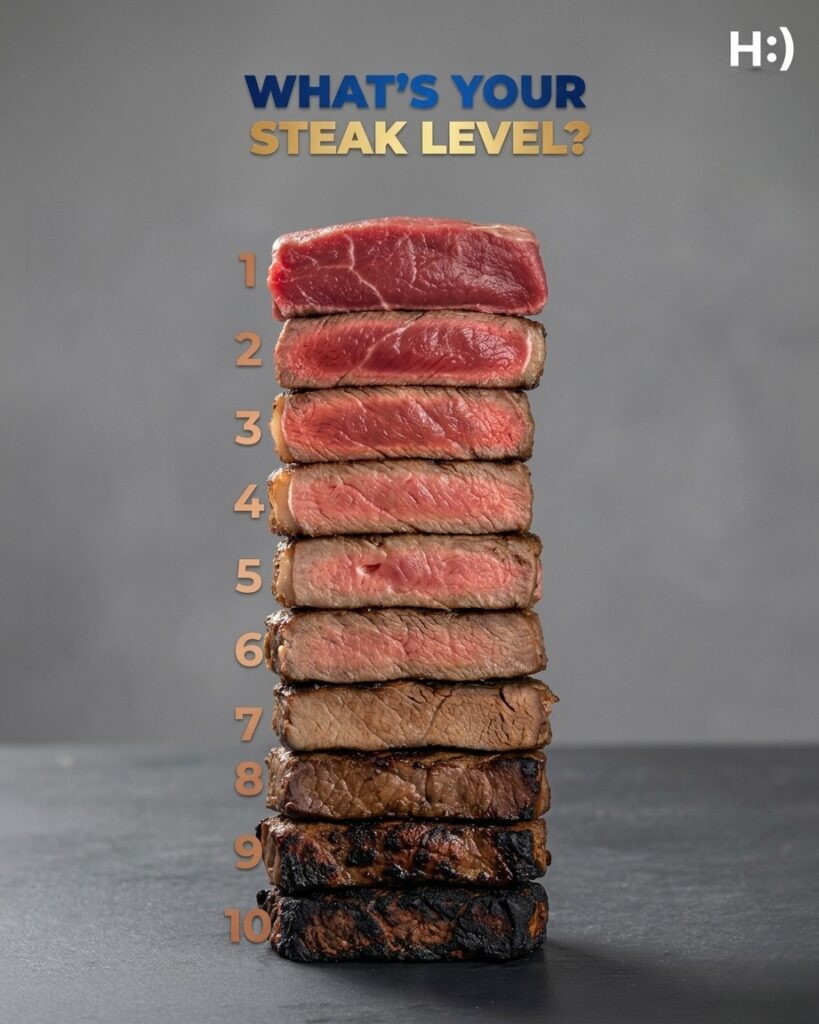
Steak is one of those culinary subjects that has the power to ignite passionate debate in almost any dining circle. From the casual backyard barbecue to fine dining restaurants, the question of “how do you like your steak?” is both deceptively simple and incredibly complex. At first glance, it might seem like a mere preference, a matter of personal taste, but the reality is far more intricate. The level of doneness you choose for your steak affects every element of the dining experience: the flavor, texture, juiciness, aroma, and even the psychological satisfaction of eating. A steak cooked to a blue or very rare stage is fundamentally different from one cooked medium or well done, and the nuances in between create a spectrum of culinary experiences that reflect not only personal preferences but also cultural norms, cooking techniques, and even the type of meat being prepared. It is this interplay of factors that makes steak one of the most beloved and discussed foods across the globe, and why people often assign a kind of “score” to their ideal level of doneness, ranging from a delicate blue to a fully well-done masterpiece. The debate is more than theoretical—it engages the senses and the soul, connecting people to centuries of cooking traditions, regional practices, and the very biology of taste. From the first sizzle on a hot grill to the moment the knife cuts through the flesh, steak is both an experience and a statement, signaling preferences that go beyond the plate and into identity, culture, and memory.
The journey of a perfect steak begins with understanding the full spectrum of doneness, from blue to well done, and what each stage actually represents. A blue steak, sometimes referred to as extra-rare, is seared on the outside but almost entirely raw inside. This level of doneness emphasizes the natural flavors of the beef in their purest form, and for many connoisseurs, it represents the pinnacle of taste. Chefs who advocate for blue steaks often argue that this is where you truly experience the depth and nuance of quality beef, where the texture is tender and nearly melts in the mouth, and where the marbling and juices are preserved almost entirely. Moving up the scale, rare steak offers a lightly cooked exterior with a warm red center, creating a balance between flavor, warmth, and juiciness. Medium-rare, often considered the ideal by many culinary experts and steak enthusiasts, features a pinkish-red center that is firm yet tender, providing the perfect marriage of texture and flavor that allows both the meat and the cooking technique to shine. Medium steaks shift further toward a firmer texture with a pink core, appealing to those who enjoy a more cooked steak but still value tenderness and moisture. Medium-well and well-done steaks, in contrast, are fully cooked through, with little to no pink remaining. While some may argue that these are the least flavorful options due to the loss of juices and tender texture, proponents enjoy the caramelized exterior and deeper, roasted flavor that comes from extended cooking. Each stage is a distinct culinary experience, and the choice of doneness ultimately shapes the way the steak is perceived, savored, and appreciated, making the question of preference far more complex than it appears on the surface.
Beyond doneness, the type of cut significantly impacts the perception of the “perfect” steak. Each cut has its unique characteristics, texture, fat content, and flavor profile, which interact with the chosen cooking level in fascinating ways. A ribeye, with its generous marbling and rich fat content, is incredibly forgiving and retains juiciness even when cooked closer to medium, making it ideal for steak enthusiasts who enjoy a balance of flavor and tenderness. On the other hand, a filet mignon, prized for its soft texture and subtle flavor, is best showcased at rare or medium-rare doneness to avoid drying out the delicate meat. Cuts like striploin or sirloin offer a firmer bite, which may appeal to those who prefer medium to medium-well steaks, where the meat’s texture becomes more pronounced, and the caramelized exterior adds complexity. Even flank or skirt steaks, often used for grilling or marinating, respond differently to heat, emphasizing the importance of not only the cooking method but also the intended doneness. Seasoning, marination, and the method of heat application—whether pan-seared, grilled, broiled, or sous-vide—also alter how each cut performs at different doneness levels. For instance, a properly seasoned medium-rare ribeye seared on high heat will develop a savory crust while remaining juicy inside, whereas the same steak cooked well-done may risk overcooking the interior while achieving a perfect char. Understanding these interactions allows steak lovers to make informed choices, tailoring their dining experience to both personal taste and the inherent qualities of the meat.
Cultural and regional factors further complicate the steak conversation, adding layers of tradition, expectation, and social influence. In the United States, medium-rare is widely celebrated as the standard for steak perfection, particularly in fine dining settings where culinary expertise emphasizes the preservation of flavor and moisture. In contrast, countries in Europe or parts of Asia often favor medium to medium-well, reflecting a preference for firmer texture and fully cooked meat. In Australia and South America, where grilling is a central part of social life, steak doneness may be influenced as much by communal cooking practices as by individual taste, with an emphasis on achieving uniformity over multiple cuts simultaneously. Even within a single culture, personal background, family tradition, and past experiences shape preference. Someone who grew up enjoying smoky, charred steaks over an open flame may favor medium-well, while another who experienced tender, lightly cooked beef may always gravitate toward medium-rare. Social perceptions also play a role: ordering a rare steak in certain restaurants might be viewed as a mark of sophistication or culinary knowledge, whereas ordering well-done could be seen as cautious or conventional. In this way, steak doneness becomes a form of self-expression, reflecting identity, taste, and even social signaling. The act of choosing your steak is thus not merely about flavor; it is intertwined with cultural literacy, memory, and the shared language of gastronomy.
The ritual of preparing and consuming steak adds yet another dimension to the concept of the perfect level of doneness. Cooking a steak is a tactile, sensory-driven process, one that engages sight, smell, touch, and taste. The sizzle as the meat hits a hot pan or grill signals the Maillard reaction—a chemical process that develops complex, savory flavors and a satisfying crust. Watching the exterior color deepen and listening for the subtle cues of cooking time become part of the anticipation, as does the aroma that fills the kitchen or dining space. The resting period after cooking is critical, allowing juices to redistribute and ensuring that the steak reaches optimal tenderness. Cutting into a perfectly cooked medium-rare steak reveals a warm, pink center that promises both flavor and succulence, while a well-done steak offers a uniform, browned interior that carries its own roasted, smoky appeal. These rituals underscore the fact that enjoying steak is not just about taste—it is about the entire culinary experience, a blend of technique, sensory engagement, and timing that can elevate a simple piece of meat into a memorable moment. Even the choice of accompaniments, from classic sauces to complementary side dishes, interacts with the doneness, highlighting the versatility and depth of steak as a food that appeals on multiple levels.
Ultimately, the “perfect steak” is a deeply personal and multifaceted concept, combining individual taste, cultural context, cut selection, and cooking technique into a singular experience. Some will argue that a blue steak represents the apex of beef enjoyment, tender and pure in flavor, while others swear by the complex, fully developed taste of a well-done cut. The cut itself—ribeye, striploin, filet, or skirt—interacts with the cooking process to influence texture, juiciness, and flavor. Regional preferences, family traditions, and social perceptions further shape expectations, making steak doneness both a personal and collective conversation. Yet, despite these variables, one thing remains constant: steak is not just food; it is an experience that engages the senses, the intellect, and even the emotions. It is about anticipation, preparation, and the ultimate satisfaction of achieving a balance between flavor, texture, and visual appeal. For many, the perfect steak is a rare or medium-rare masterpiece, seared to perfection, juicy, and flavorful. For others, it is a medium or well-done cut with a satisfying crust and robust texture. The key is that the ideal level of doneness is less about universal rules and more about the harmony between meat, heat, and personal preference. Whether you rank your steak a 1 or a 10, the true joy comes from understanding the process, appreciating the subtleties, and savoring the result with mindful enjoyment.